Showing posts with label England. Show all posts

Tuesday, March 1, 2016

The Lost World of All Creatures Great and Small

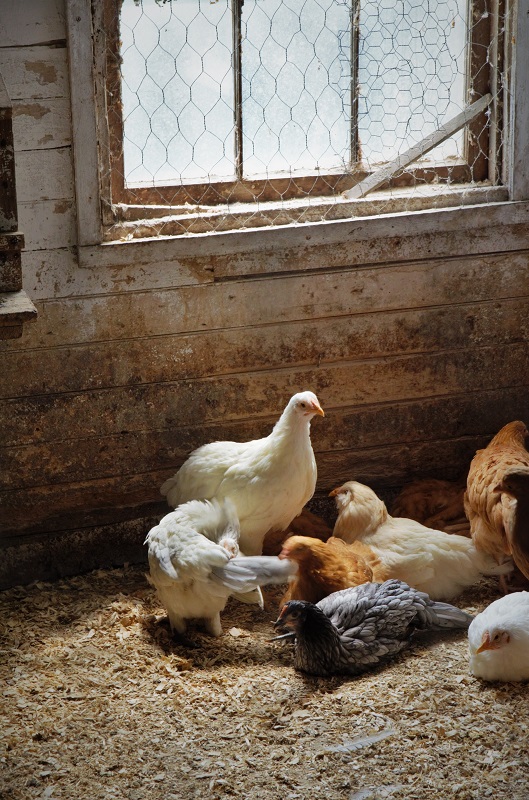
Picture by Psyche
There probably aren’t very many people who aren’t familiar with James Herriot, the country vet who motored around the Yorkshire Dales, saving the lives of sick animals and encountering their eccentric, hard-bitten, but entirely lovable owners. The veterinary world has changed a lot since then; now there are shining operating tables, plastic gloves and x-ray machines. In contrast James Herriot describes practicing in the most primitive conditions…traveling in cars without heaters, operating on tables that had to be propped up during surgeries, stripping half-naked to deliver a calf in the middle of the night.
In reality, of course, the name was Alf Wight, and the stories, though based on his experiences, are mostly fictional…which probably makes them all the more remarkable, considering what the author was able to achieve.
Picture by Psyche

My first encounter with All Creatures Great and Small, was with the television series, which ran intermittently from 1978-1990 and starred the magnificent Robert Hardy (who, aside from being an expert on the long bow, studied under both C. S. Lewis and J. R. R. Tolkien). Watching the shows became a family tradition; I laughed my way through them, but didn't really understand them. I was too young, I guess; but from that moment forward, I wanted to be a vet. As a little girl, I gathered odds and ends from around the house which struck me as doctoring equipment; we didn’t have a dog, but stuffed animals worked just as well. So I started my own practice, and ran it until I grew out of it.
Picture by Psyche
But then, I was old enough to pick up the books. They opened up a world, a world which many of us will never see, a world of hard work; dirty, but clean; heartbreaking, but full of joy; a whole race of people who lived according to the cycles of the land and (pardon the expression) very close to nature. And that, I think, is the real treasure of James Herriot…because the books aren’t about the animals he saved, they are about the fast disappearing Dales farmers he admired so much.
Picture by Psyche
In the sterile, artificial society which we now live in, we tend to forget that at one time, most of the population lived in the great rolling countryside, hidden away among the hills, nearly isolated from the Great World Outside. It’s only in recent centuries that people have poured into cities. Of course there were always the great cities like Rome or Constantinople, but they were small in comparison with the cities we have today. Once upon a time- indeed, for thousands of years, people lived with their livestock, very close to the land.

Picture by Psyche
Life seems to have become very clinical now-a-days. Kids go to school, mother and father both work; there are electric bills, grocery bills, care repair bills...in between family members hardly get to see each other, or form any kind of relationship. Sometimes they go on vacation, but jobs, friends and exciting happenings are distracting. In contrast, James Herriot describes families that live and work together, learning together, laughing together and weeping together. These Dales families did the same things every year in a never ending cycle, but they never grew tired of it; they were staunch and steadfast and remembered that blood is thicker than water. Relationships had to work, because the people had to work together; there was no option of backing out, or trying something different, because the abyss of foreclosure and starvation was always just around the corner.

All Creatures Great...and Small
Picture by Psyche
Of course, the books probably paint that bygone world in rosier hues than it really was. The work was really hard and car heaters and WiFi and televisions are nice to have, but I can’t help thinking something has been lost. I only partially know what it is like to have loving grandparents…aunts and uncles live thousands of miles away and my extended family have fragmented beyond repair. James Herriot wrote about families, great families that were powerful, but very humble, and that’s the reason I get a small ache every time I read his books, because I have a longing for something I can only hope to experience.
~Psyche

Sunday, February 15, 2015

Evelina: Or the History of a Young Lady's Entrance into the World

Frances Burney by her cousin, Edward Francis Burney
Most people know who Jane Austen was. A mention of her most famous book, Pride and Prejudice, will probably conjure up the vivacious and lively Elizabeth Bennet, and the rich and enigmatic Mr Darcy. Miss Austen’s books, and life, have been made into so many movies that, chances are, you’ll know what all her most famous books were about without even having read them.  
However, unless you are an 18th century literature enthusiast, you probably don’t know who Frances Burney was. The name ‘Evelina Anville’, won’t ring a bell; neither will ‘Lord Orville’…but I think it’s safe to say, that without them, the world would never have been introduced to Elizabeth and Mr Darcy. It’s not even going too far to mention their influence on Charles Dickens.
A facsimile edition of Evelina from 1903
Evelina had a rather tumultuous beginning. Its author, Frances Burney, was the daughter of Charles Burney, who knew everyone there was to know in the higher circles of life. Frances had met Doctor Johnson of the Dictionary, and, in relation to my last post, WilliamBligh, who had sailed with her older brother alongside Captain Cook. She was self-taught, literally. She read books compulsively, teaching herself grammar and spelling; by the time she was ten, she was writing to keep herself company. Her first attempt at a novel was The History of Caroline Evelyn, which she burned in its entirety when she was fifteen. Evelina, in many ways is the daughter of the lost manuscript; Frances Burney was trying again, and the title character, Evelina, was the daughter of the unfortunate Caroline.
Robinson Crusoe as imagined by N. C. Wyeth
A hundred years of English novels proceeded it. In the late 17th century, novels were thought of as shocking and crude; not fit for the better classes of people. Novels were considered improper, and indeed, many of them were, but ever since Daniel Defoe had fictionalized and romanticized Alexander Selkirk’s four-year,self-imposed sojourn on a desert island in the form of Robinson Crusoe in 1719, novels had taken England by storm. No longer was reading for instruction; analogies like Pilgrim’s Progress, from 1678, which taught as well as entertained, were giving way to reading material that was meant for pure enjoyment. 
When Frances Burney was busy writing at the end of the 18th century, there was still a clash between lurid, graphic reading material like Tom Jones of 1749, or the later (and disturbing) gothic novel, The Monk of 1796 (satirized in Northanger Abbey), and proper novels, like the books of manners that Jane Austen would eventually pen. It was a risky business publishing a book, but Frances Burney persevered; in 1778, her older brother managed to publish Evelina for her under a pseudonym to public and critical acclaim.  Edmund Burke and Samuel Johnson praised it highly; little did they know it was written by a shy, young women of only twenty-six whom they both knew.
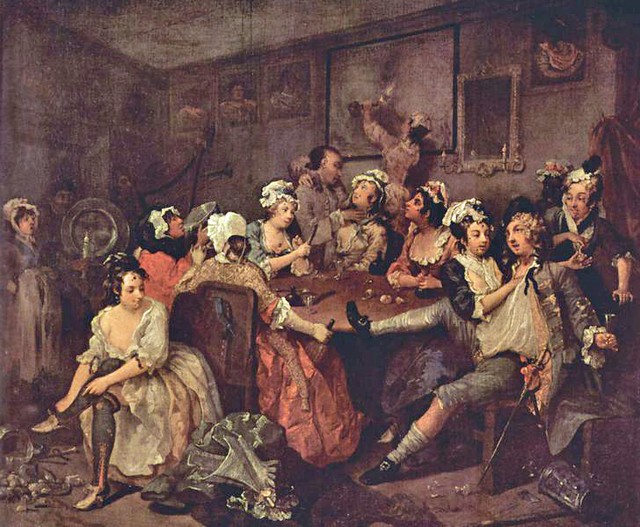
A plate from A Rake's Progress by William Hogarth, showing
the 18th century for what it was: almost completely lacking in 
the decorum and modesty that would become hallmarks of the 
Victorian era
Evelina is written in the form of letters, exchanged between a seventeen-year-old girl on her first venture into the great world, to her guardian, Reverend Villiers of Berry Hill. This was not an uncommon way of writing novels in those days; Jane Austen wrote her first novel, Love and Friendship, in the form of letters between 1783 and 1790. One of the first epistolary novels was Love-Letters Between a Nobleman and His Sister (yes, it’s every bit as bad as it sounds) written by Aphra Behn in the 1680s. Evelina bears some minor resemblances to this, and other earlier novels, like those by Samuel Richardson, but is, in many ways, a very new and different sort of book than had ever been written before. 
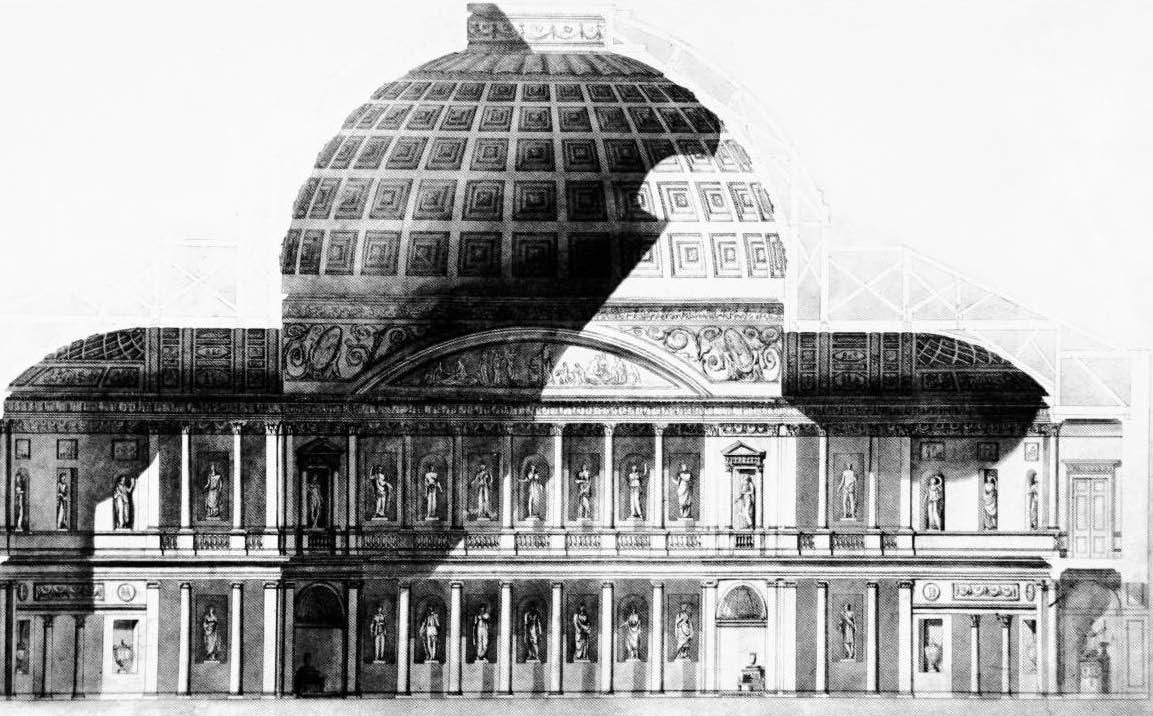
The Pantheon in London, modeled after its namesake in Rome,
was once one of the grandest assembly rooms in England
The most important aspect of Evelina, is its incredible realism. Unfortunately considered long-winded and cumbersome by today’s standards, Evelina was revolutionary in its day. Over a period of seven months, the letters meticulously describe aworld that is completely alien to us today. Though the eyes of the heroine, we see London, hot, dirty…but terribly exciting. There are balls to visit, gardens, Cox’s Museum, which was an array of elaborate mechanical devices. Evelina writes, “They tell me that London is now in full splendour. Two playhouses are open, – the Opera-house, – Ranelagh, – and the Pantheon. – You see I have learned all their names.” When she goes to visit them, we find out first-hand, what it’s like to sit in an 18th century box and watch an 18th century opera. 
Ranelagh Gardens in Chelsea were at their height when
public gardens were all the rage
And of course, no period romance would be complete without balls, and Evelina goes to her share of them and has her share of misunderstandings when she accidentally breaks the social codes; "[she is] A poor weak girl!” Lord Orville remarks when asked his first impression of her ('weak' in this instance meaning 'weak-minded'). In this way, at least, Evelina isn’t quite accessible to the modern reader. Frances Burney was writing for her time; she didn’t realize that two hundred years after the fact, people would still be reading her book. Word usage has changed and there are many other things taken for granted that her readers would have known, such as realizing the full import (or the impossibility) of an Earl proposing marriage to seemingly penniless (and possibly illegitimate) young girl; this doesn’t detract from the story…it’s all the more interesting for learning about how different it was to live then.
The Colonnade at Hotwells, Bristol in 1788
by the Swiss artist Samuel Hieronymus Grimm
one of the locations for Evelina
On the other hand, Evelina is a very modern book. We still feel the emotions they felt then and are delighted by the same things. Not only are the circumstances surprisingly easy to relate to, but the language is modern. Contractions are scattered liberally through the dialog and Miss Burney’s ease at writing dialect marks her as a fore-runner of Charles Dickens. Many expressions which we still use today are scattered throughout Evelina, such as ‘in a huff’, ‘sick of it’, ‘the man in the moon’, ‘putting in one's oar’, ‘point-blank’, ‘changing with the tide’ and ‘thing-em-bob’. Even some of our prejudices can be dispelled; women might not have had the vote in 1778, but they had a voice. Mrs. Selwyn, an independent woman with a large fortune, regularly runs rings around the men with her wit and intelligence. As Mrs. Selwyn says, “Come, gentlemen…why do you hesitate? I am sure you cannot be afraid of a weak woman?”
We all know Shakespeare had wit, but so did Fanny Burney. I don’t think any of Jane Austen’s books are as laughter-inducing as Evelina. Partly because she was so young and partly because she had a natural turn for humor, Frances Burney often turned serious moments into comedy. There’s a pre-planned hold-up and mugging of Evelina’s pretend-French grandmother by pretend-highway bandits and Sir Clement Willoughby, Burney’s hilarious and good-natured villain, is always ready to be amusing. Even the near-perfect hero, Lord Orville, on closer inspection, becomes a flawed, but humorous and kind-hearted character.
Frances Burney went on to write other books, but the spontaneity and light-heartedness of Evelina set it apart. Yes, it deeply influenced Jane Austen and her much more famous books, but Evelina can stand very well on its own two feet. It marked a turning of the tide, the opening of the door to a genre that we still can’t get enough of. It is tragic, then, that Evelina, and its author, are not better known. They deserve to be.


Excerpt from Evelina:
THERE is to be no end to the troubles of last night. I have this moment, between persuasion and laughter, gathered from Maria the most curious dialogue that ever I heard. You will at first be startled at my vanity; but, my dear Sir, have patience!
It must have passed while I was sitting with Mrs. Mirvan, in the card-room. Maria was taking some refreshment, and saw Lord Orville advancing for the same purpose himself; but he did not know her, though she immediately recollected him. Presently after, a very gay-looking man, stepping hastily up to him cried, "Why, my Lord, what have you done with your lovely partner?"
"Nothing!” answered Lord Orville with a smile and a shrug.
"By Jove," cried the man, "she is the most beautiful creature I ever saw in my life!"
Lord Orville, as he well might, laughed; but answered, "Yes, a pretty modest-looking girl."
"O my Lord!" cried the madman, "she is an angel!"
“A silent one," returned he.
"Why ay, my Lord, how stands she as to that? She looks all intelligence and expression."
"A poor weak girl!" answered Lord Orville, shaking his head.

I don’t know about you, but there’s something about this excerpt that reminds me of a discussion between Mr Bingly and Mr Darcy about Elizabeth Bennet in Pride and Prejudice, and Mr Darcy’s comment, “[She is] not handsome enough to tempt me.”

Thursday, January 29, 2015

Captain Bligh: Chronically Misrepresented

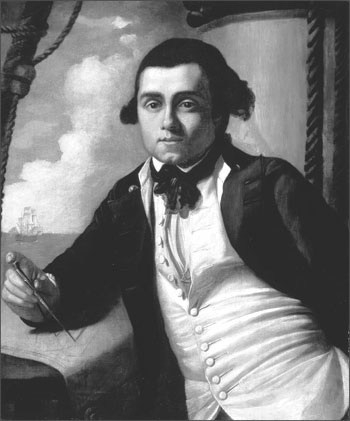
Bligh, as he appeared in 1792,
Not exactly looking like a homicidal maniac
In the late 18th century, a plan was hatched to introduce breadfruit trees from the Polynesian Islands to the Caribbean to feed the growing population, both slave and free, that worked the vast sugar plantations. Today, breadfruit flourishes in the Caribbean largely due to one man, then a thirty-three year old lieutenant in the Royal Navy known as William Bligh.
Almost everyone knows about the Mutiny on the Bounty. Whenever ‘mutiny’ is mentioned, ‘Bounty’ is slapped on, too. The story is now used as a symbol of rebellion against oppression, a poster child of Navy brutality, a struggle between the aristocracy and the common man. In many ways, it’s true; there was a rebellion, life at sea was brutal, and it was a struggle between the aristocracy and the common man…though not in the way that you are thinking, because William Bligh was the common man and Fletcher Christian was the aristocracy.
Bligh at twenty-one, as Cook's Sailing Master
William Bligh was in the Navy since he was seven. He served as an able-seaman, when there were no vacancies for a midshipman, slowly working his way through the ranks. Because of his brilliance in navigation, at the age of twenty-one, he served as Captain James Cook’s Sailing Master in his last voyage of discovery in the South Seas. It is from Bligh that we have one of the most complete accounts of the death of Captain Cook in Hawaii; Bligh was nearly killed himself, but instead of allowing his men to scatter like the marines assigned to guard Captain Cook, he held his ground until reinforcements came from the ship.
Breadfruit
William Bligh seemed the ideal man to lead an expedition to collect breadfruit. He knew the area, he was a gifted navigator and cartographer, and was something of an explorer and naturalist as well. So, on 23 December, 1787, the young lieutenant set out, in command of a tiny ship named the Bounty, forty-six officers and men, and a friend of the family, Fletcher Christian, as Master’s Mate.
Thursday October Christian,
Fletcher Christian's oldest son
Fletcher Christian is something of an enigma. He was descended on his father’s side from Manx aristocracy. His was born on the pleasant Moorland Close estate and despite his mother’s irresponsibility with money, his upbringing would have been far superior to anything Bligh experienced as a child. Early in the 1780s, Bligh, ten years older, met Fletcher Christian, and took him on two voyages, meticulously teaching him navigation. It was on Bligh’s recommendation that Christian sailed as Master’s Mate on the Bounty.
The most accurate replica of the Bounty, from the 1984 movie,
currently resides in Hong Kong. The other replica, like its namesake,
is at the bottom of the sea.
Bligh has often been described as a sadistic commander, ruling with an iron fist and meting out terrible punishments right and left. He is universally depicted in movies by little men, ten or twenty years too old, with slightly neurotic performances, in command of replica ships twice as big as the real one. In reality, Bligh hardly ever punished his men, even allowing them to sleep during the hectic attempted rounding of the Horn in the only dry place aboard the ship: his tiny, closet-like sleeping cabin in the stern. The Bounty was a little ship, less than ninety feet long, and in a time when the average seaman stood at 5’4”, Bligh was a respectable 5’8”. Fletcher Christian was an inch taller, probably due to his better nutrition as a child.
Black sand in Tahiti
All in all, the Bounty had an uneventful voyage to the South Seas; one man died of an infection after he was bled by the drunk doctor, but otherwise, morale was good. On their navy-ordered route, storms lashed them during their attempt to double the Horn, but Bligh turned back, knowing that he was beaten, and sailed around the Cape of Good Hope instead. He managed not to lose a man in the storms when other ships, sailing the same waters that year, lost half their compliment.
The local wildlife
On the 26 October, 1788 the Bounty let down her anchor off the beautiful black sand beaches of Tahiti. For the next five months, with the help of the native chief and his people, the English sailors transplanted breadfruit trees into pots and put them in specially built containers in the great cabin of the Bounty. Bligh, when not overseeing the undertakings, was talking to the chief about his customs, surveying the harbor, and, because he was an artist, taking note of the local wildlife. Despite all his work, he noticed that his crew was getting on famously with the locals and by the time the Bounty set sail for England, a number of them were breaking out with venereal disease.
Maori Chief from New Zealand,
colored engraving 1784, copied from a painting
Bligh had a notorious temper and took most of his frustration out on Fletcher Christian, who seemed to be crossing him at every turn. Bligh’s sailors were busy getting tattoos and deserting, rather than potting breadfruit trees, and Bligh flogged them more on land than he had at sea. The native chief wasn’t helping any, either; Bligh reported that, “The chiefs have taken such a liking to our people that they have rather encouraged their stay among them than otherwise, and even made promises of large possessions.”
Captain Bligh & Co being set adrift
by the Mutinous Mister Christian
Everyone is probably familiar how, a few weeks into the return voyage, Bligh woke up to a dancing lantern over his head and a bayonet at his throat. He was taken on deck, and as the sun slowly rose, he and eighteen of his loyal crewmen were herded into the ship’s longboat and set adrift, to watch the Bounty sail off into the sunrise. For many, this is the end of the story; Fletcher Christian sailed off, first to Tahiti, to pick up wives and drop off sixteen of the mutineers, then to Pitcairn Island, with the remaining eight mutineers and many Tahitian men and women. Fletcher Christian’s ultimate fate is unknown, except that by 1808, only one mutineer was left alive; the rest had either murdered each other, or died of disease.
Captain Bligh's coconut, carved with the words,
"the cup I eat my miserable allowance out of"
For Bligh, the story had only begun. He was in a badly over-loaded open boat, with eighteen of his crew, limited food supplies, no maps and only an outdated quadrant and a pocket compass, 3,618 miles from civilization. The journey that followed is one of the most remarkable and little known in history; they withstood storms, hunger and cannibalistic islanders. Bligh, instead of being petty, was meticulously fair with the rations, often giving more to the sicker members of the crew to keep them alive. Bligh, himself, often went without sleep and most amazingly of all, was able to navigate accurately all the way to the coast of Australia with faulty and make-shift instruments and nothing but the maps in his head. On top of that, despite his emaciated condition, Bligh continued to draw maps of the coast, even discovering islands that had never before been seen by Europeans.
An artist's (optimistic) idea of what Bligh
and his crew looked like when they arrived in Timor
Forty-seven days after the mutiny, Bligh and his starving crew stumbled into Kupang, Timor. The first thing he did was write to his wife in heart-broken words, “Know then my own Dear Betsy, that I have lost the Bounty...” However, he had reason to be glad; despite the horrific conditions during the open-boat voyage, he had only lost one man who had disobeyed orders and was stoned to death by cannibals on Tofua.
Peter Heywood as a Post-Captain
Bligh returned to England a hero. It wasn’t until the fateful voyage of the HMS Pandora and the collection of the sixteen mutineers from Tahiti, that his name was blackened. One of the mutineers brought back for trial was a young midshipman named Peter Heywood, who, like Fletcher Christian, had family ties in Manx nobility. The Heywood family, uninterested in being related to a mutineer, managed to turn the story around during the trial to get Peter Haywood acquitted. But it wasn’t until the Bounty trilogy of the 1930s, and the subsequent movies based on them, that the story became so infamous.
A still from the 1935 Mutiny on the Bounty
Was Bligh to blame for the mutiny? Had life under him become so terrible that the crew had to mutiny? Bligh was known to be thin-skinned and self-righteous, but he was also forward-thinking; always concerned about his men’s health and welfare. Instead of being a brutal maniac, as depicted in popular culture, Bligh’s weakness seems to have been his lenient approach to discipline. Bligh went on to command other ships and other men, playing a key role in winning the Battle of Copenhagen, and even becoming governor of New South Wales, before retiring as Vice-Admiral of the Blue. He suffered two more mutinies under his command; one, which was fleet wide, and the other, in Australia, when he tried to root out corruption.

Tahiti Revisited by William Hodges 1776 
The voyage of the Bounty might have been a disaster, but Bligh had a second chance to do it right. In 1791, a year after returning to England, Bligh, in command of HMS Providence and accompanied by the smaller HMS Assistant, returned to Tahiti, collected his breadfruit and successfully introduced the species to the Caribbean.

~Psyche 

PS: In 2010, four men recreated Bligh’s amazing open boat voyage across the pacific with limited instruments and finished only one day over schedule. For a scholarly look at the events surrounding the mutiny, read The Bounty by Caroline Alexander. 

Wednesday, December 10, 2014

The Swallows and the Amazons

A map of their Adventures
When I was seven years old, my sister deemed I was finally Old Enough for Some Things. One of them was the Seven-Year-Old Wonder Book, which she started reading to me the night of my seventh birthday, the other was Swallows and Amazons by Arthur Ransome.
Growing up homeschooled in a place that doesn’t really approve of homeschooling, can often be lonely. Some years we didn’t have any friends at all; they, or their parents would make short work of the relationship. So often times, we had to make do with ourselves…and various characters in books. There were weeks on end when my sister was Sir Percy Blakeney and I was Sir Andrew and we were rescuing people from prison during the French Revolution. Genres even crossed sometimes, with the successful rescue of Sidney Carton from under the noses of the French. We rewrote War and Peace with a happy ending, amended The Chronicles of Narnia so it could be played out with two children instead of four, and went off to wander the slopes of Wales with Taran and Eilonwy in The Prydain Chronicles.
Coniston Water in what is now Cumbria,
one of the cheif influences behind the books
Photograph by Paul Mcgreevy on Flickr
So we really weren’t as lonely as might be expected. We had each other, and we had books and along with The Chronicles of Narnia, Away Goes Sally by Elizabeth Coatsworth, and The Good Master and Singing Tree by Kate Seredy, there was the Swallows and Amazon series.
It’s perhaps my favourite series of all time. Though it’s hard to say, because there are others that finish very close to it. I can say, however, that it is the most engrossing and deceptively simple series I have ever read. Not only are the plots ingenious and unexpected, but each book is completely different from the last. 
Horning, Norfolk, setting for two of the books
Photograph by Rob Fairweather on Flickr
Starting in 1929, the series follows a group of children as they grow up in England in the years just before the war. There is no frivolous description, no romance to muck things up, they are strictly stories of childhood…and what stories they are. Many people are attracted to the books because of the things the children get to do; they camp on islands, are allowed to use matches, go gold prospecting, sail across the North Sea by themselves in a gale…among other things. The books are also packed with masses of practical knowledge about wind and tides and fishing, and include other professions that are almost dead, like charcoal burning and wooden boat building.
More breathtaking scenery form the Lakes District
Photograph by Andy Rothwell on Flickr
But the thing that shines the brightest is how real they are. Somehow they make ordinary things seem exciting; getting lost in the fog becomes an epic adventure, and other things that might easily become boring, like camping in a garden, aren’t. It’s hard to believe that these children and this lake and those sailboats could have come from the imagination of anyone…and to be fair, they didn’t. Arthur Ransome, the author (he was a good friend of J. R. R. Tolkien, by the way), based it on his own childhood, and on the adventures of children he knew.
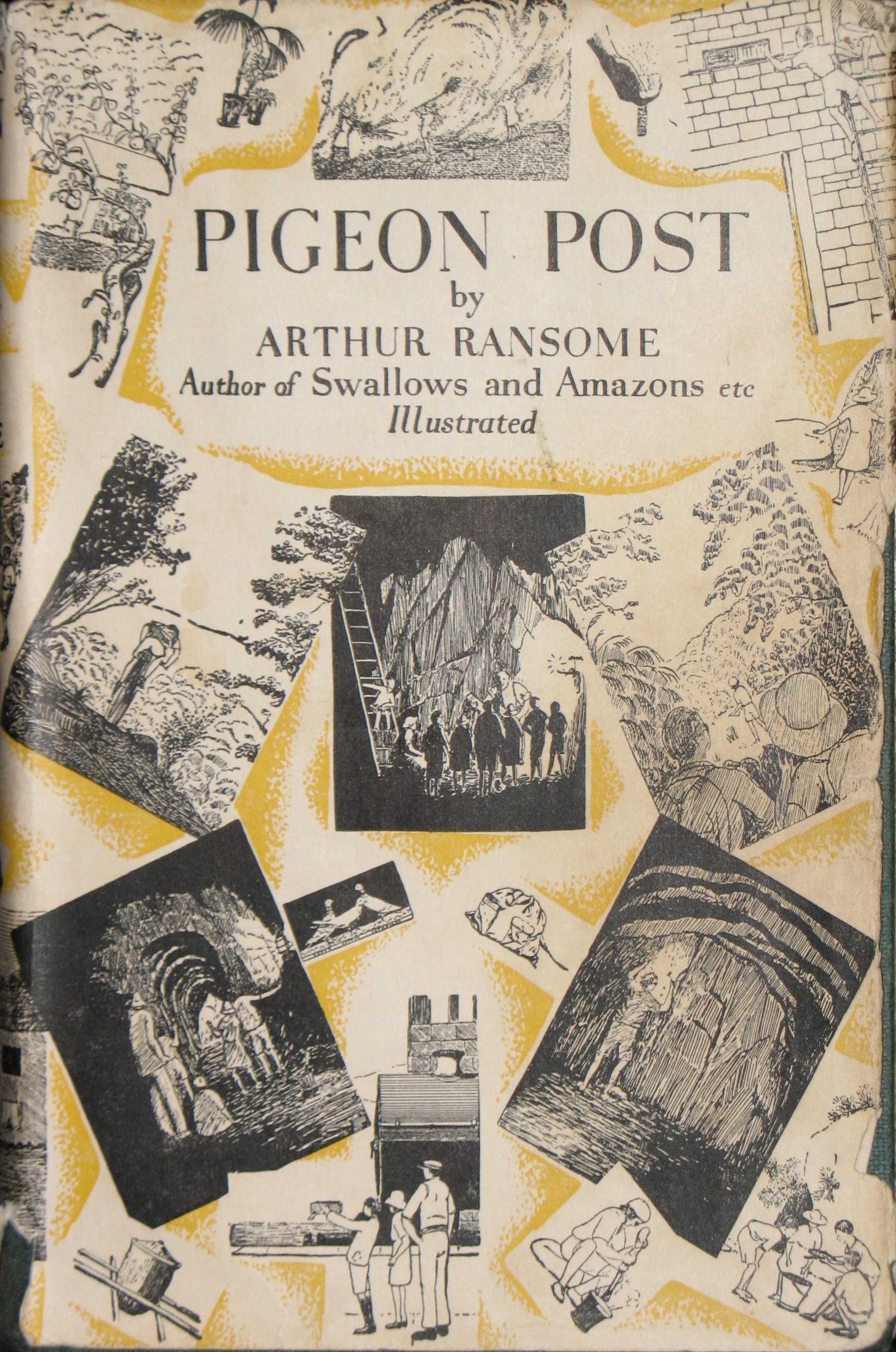
A first edition of Pigeon Post, the first book
ever to win the Carnegie Medal
Consequently, the characters in the stories are some of the most vivid I have ever read about. They are so alive, that, despite their author, they begin to grow up as the years pass. Almost imperceptibly they change through the series, their roles shift, they become wise from their mistakes; some of them make plans for the future…and quite suddenly, Arthur Ransome realized that his beloved children had grown up on him and he stopped writing.
For some unknown reason, because they are written for children, about children, the Swallows and Amazons series is dismissed by most people as silly little children’s’ stories. In reality, there is nothing silly about them. They are more serious and thought-provoking than many ‘adult’ stories and painstakingly paint a picture of a world that once was and never will be again: a world of river wherries and tall ships going down Channel, a world of exploration without restriction, a world where children are capable and can be trusted without lifejackets.
Shotley in Essex, one of the starting off points for
We Didn't Mean to Go to Sea, our favorite book in the series
Photograph by David Parker on Flickr


I would recommend Arthur Ransome’s books to anyone, but somehow I doubt an adult could ever understand what it was like to be first introduced to them at seven years old, and to be able to grow up with them and watch them change just the way you yourself were changing in the meantime. Perhaps, as an adult, if you grasp the novel idea that children’s thoughts are just as important, and their feelings just as sophisticated, as those of grownups, you may be able to appreciate these books. Life isn’t all about who falls in love with whom, or gangsters in dark cities, or going off to a war. There are the times in between, as well.
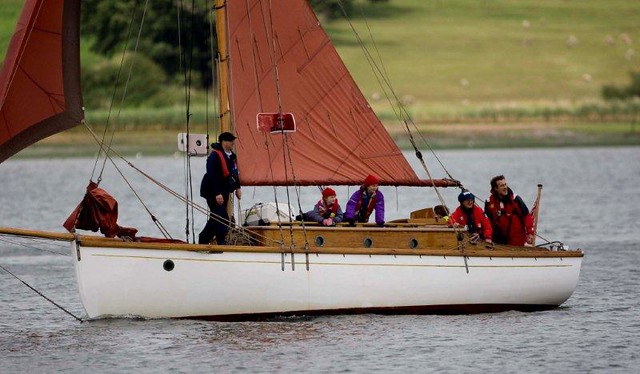
The Nancy Blackett, Ransome's own boat, and the inspiration
for Goblin

Just to wet your appetite, here’s an excerpt from Secret Water one of the last books in the series, which I think sums up what the books are like:
“I say,” said Titty. “We ought to count days, like Robinson Crusoe.”
John bent down and cut a notch in the flagstaff. “That’s for today,” he said. “Every day we’ll cut another notch until the Goblin comes back…”
“And then when we lie exhausted on the sand…” said Titty.
“Jolly wet mud,” said Roger.
“We’ll see a sail far away. And it’ll come nearer and nearer. And the captain will say, ‘Clap your eye to a spyglass, Mister Mate.’ And the mate (that’s Mother) will say, ‘There’s something moving on the shore. They’re still alive.’ And we will wave and try to shout, but our parched throats won’t let us. And they’ll sail in, and we’ll hear the anchor chain go rattling out. And then we’ll all sail away together and see the island disappear into the sunset.”
“It may be morning,” said Roger.

Tuesday, November 11, 2014

Fact or Fiction?

Charles Dickens is probably more notorious than Shakespeare. Shakespeare’s plays can each
Charlie in youth
be read in two hours. Dickens takes weeks.
Dickens’ work is a tumultuous gathering of characters; of darkness and despair, of love, of humour…half satire, half reality. Ebenezer Scrooge is a miser of misers; the likes of Miss Havisham, or Mrs Clennam seem too bizarre to be real. Old, old people locked up in houses tottering on unsteady foundations…wedding cakes cloaked in cobwebs, things never changing, only growing older and dustier in a changing world.
But, Dickens was writing for all of us. The things that happen in his books happened to us, sometimes not in our memories, but sometimes in the hand-built past of our ancestors.
Miss Havisham and Pip
I know a house that came straight out of Dickens. It was even built during his time. At first glance it seems ordinary, even boring, with chipping lead paint and old glinting windows. There’s a musty smell when the door is opened, the stink of a gas stove. In the darkened living room, scattered with things so old they were made before your grandmother was born, sit my grandparents…old, grey, with hearts locked away, never to be picked.
The Dickens characters may seem bordering on impossible, but I’m confident that he met every one of them, because I have. The Dickens’ plots may seem too elaborate, too bizarre, but sometimes my family’s past was even weirder.
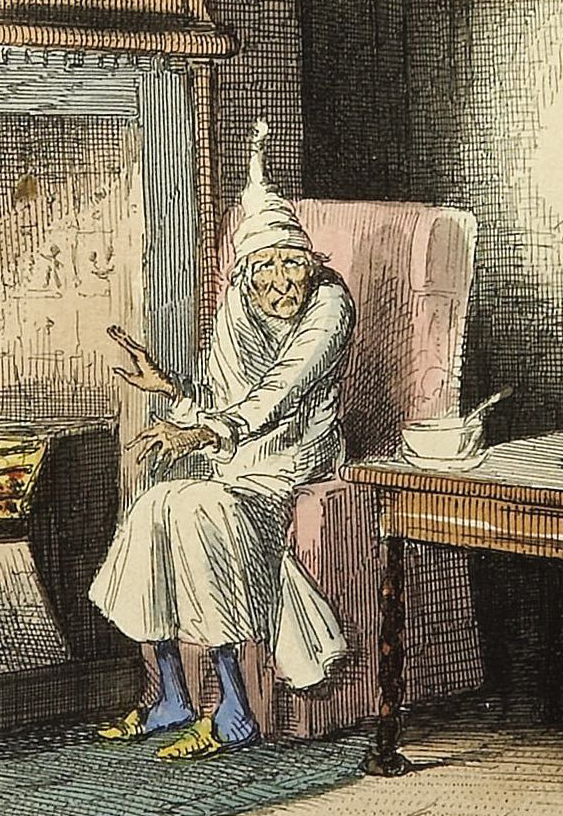
Scrooge meeting the ghost of Christmas Present
Under the layer of dust that coats everything in that house lay secrets, secrets straight out of a Dickens’ novel: murder, tragic deaths, love, happiness, selfishness. They are the ordinary sorts of people, the people who sapped off others, the people only thought of themselves, who neglected their children and impounded selfishness and ignorance. They were mad eccentrics who made brilliant things, but never cared about their families; they were social climbers and various kinds of murderer. They may be dead now, but there are faded photographs, old newspapers blackened with obituaries, handwritten letters more than a hundred years old that tell their stories.
Sometimes it’s depressing to read about them; after all, most of them are like that…these are the people Dickens met in the dark London streets, or in the blacking factory he worked in as a boy…but fortunately they weren’t the only people he wrote about, nor the only people my family can claim. In my grandparents’ house there are the few records of people who gave their own lives to save others, of two uncles who gave their fortunes away to other people without so much as a thanks or a kind word in reply. These characters are hardest to find in real life, the truly kind and good ones, people like Arthur Clennam, and Pip’s brother-in-law, Joe Gargery, and of course, Bob Cratchit.
And sometimes when my life does intersect with someone like that, I feel like the tiny woman who treasured a shadow, in the story Amy Dorrit told Maggie, because no one so kind or good as the man who had cast it had ever, or would ever, pass that way again.

apologize for not writing blog posts more often. Because of my illness, posts will probably peter off during the winter and return in strength in the summer. Each post takes some time to write and research and often times I don't have enough energy to do either. I hope you will bare with me and continue to visit anyway. Thank you! ~Psyche


Monday, October 13, 2014

Medieval Architecture

Warwick Castle, by Extra Medium on Flickr
There are more than a thousand relics, ruins and remnants of the great stone castles that once dominated England. It’s easy to think, after seeing pictures of the likes of Warwick Cast, or the Tower of London, that the all the people of Medieval England either lived in gigantic castles, or mud huts which have since disappeared. Neither is really true. There were enough people groups and building styles it’s like to drive you mad, but I will attempt to tell a little of what I’ve found out.

Background

Maiden Castle
The Bronze and Iron Age Celts constructed ring forts (in Ireland) and hill forts all over the British Isles. The distinctive circles can be seen under the turf especially well at Maiden Castle in Dorset, the largest of the Iron Age hill forts. For the most part, these hill forts were small towns, surrounded by concentric rings of earthworks and palisades with very little stonework. In Ireland, on the other hand, the ringforts were built of stone.

The Grianan of Aileach, an Irish ringfort in Ulster,
was rebuilt in the 1870s by a group
of overenthusiastic archaeologists

The great builders of stone, however, were the Romans, who showed up in AD 43 and, over the next four hundred years, completely remodelled the face of Britain. The Romans had a particularly efficient way of laying roads and walls, as was demonstrated by the building of Hadrian’s Wall along the Scottish border in just six years. Distinctive Roman walled cities sprang up in places like London, Chester and York and because of the relatively gentle British climate, the Romans and Romanized Britons were able to build Italian style villas, which were envied by even the aristocrats in Rome. Probably the most famous Roman site in Britain is the city of Bath in Somerset with its partly rebuilt, but still functioning bathhouse.

The Anglo-Saxons

The Greensted Church in Essex is the oldest wooden church
 in the world and is considered by some to be the oldest
wooden structure in Europe. The Anglo-Saxon frame has
been covered over by later additions, but it still remains,
along with curious original elements like leaper holes in the walls.
The Romans left Britain in AD 410 and the Angles and Saxons took their place. For many years, archaeologists declared that since they couldn’t find anything really conclusive, the early Anglo-Saxons had no distinctive building style and never built anything of note. Which, of course, isn’t true.
It now appears that Viking and Norman eradication of everything Saxon, coupled with the Anglo-Saxon habit of building with wood, pretty much wiped out any remnants of Anglo-Saxon architecture. Yet, in some nooks and crannies of England, there are still some bits and pieces that the Normans forgot and the elements haven’t rotted away.
The Exeter City walls show layers of history; Roman on the
bottom, Anglo-Saxon in the middle, Norman on the top
It seems that the Anglo-Saxons took their inspiration from Roman architecture, incorporating columns and arches into their buildings. The Saxons didn’t have the expertise of the Romans, but they made every effort to repair or replace crumbling Roman buildings and walls. Through the Dark Ages, the Anglo-Saxons didn’t build great stone castles, but they did build small wood and stone churches. Their houses were probably very much like our vision of an English cottage of timber and daub and a great thatched roof. Their castles or Burhs (the root of the word and concept ‘borough’), like the Celtic hill forts of old, were made of earth and wood.
The Anglo-Saxon tower on Trinity Church in Colchester

by Nic McPhee on Flickr
Under Alfred, England really became England and for some reason, around that time, the Anglo-Saxons caught the Cathedral fever and started to build big. I'm not sure why they felt the need to build massive cathedrals rather than massive castles; perhaps it was because prosperity abounded and, in a unified kingdom, everyone felt more secure, even though the truce with the Danes was quite shaky. Either way, they probably would have been wise to build castles instead of cathedrals, considering what came over the sea in 1066.

The Normans

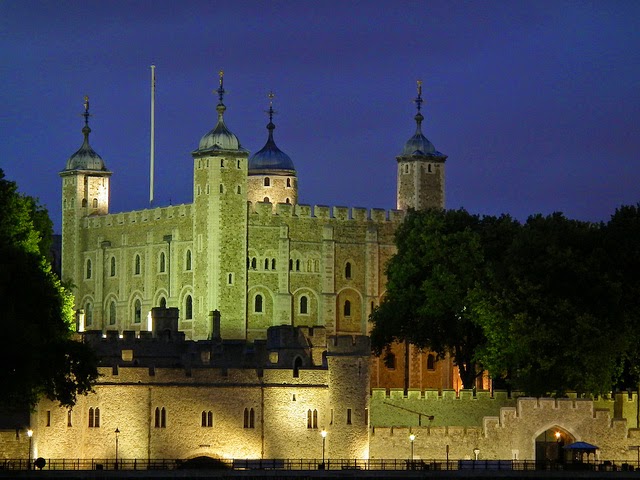
The White Tower, built by William the Conquerer,
was probably the first significant Norman structure in England
The ornamental domes are not original to the building
by Stewart Morris on Flickr
The Normans were master castle builders. They were so prolific, they built them all over the British Isles, all over France, all over Italy and all over the Holy Land. They even imported stone from France to build structures like the Tower of London and remodel Canterbury Cathedral. They were trying to make a statement with their massive, stark designs and used castle building as the chief means of taking over territory. In order to build a castle, a noble had to ask the King specially, and even then, the noble was limited to the number and style. Only the Marcher Earls of the boarder and interior of Wales and Ireland could build castles as they chose. Even now, Wales has more castles per square mile than anywhere else in the world.   
The Jew's House by David on Flickr
But the Normans weren’t all about castles. After they leveled the Anglo-Saxons, took out the Danes and made inroads into Wales, Ireland and Scotland, they remodeled or rebuilt all of the Saxon Cathedrals and added some of their own. They built great new monasteries on Saxon foundations and added new layers of stone over Saxon repairs of Roman walls.  But I think the most fascinating and intimate structures are the few remaining examples of Norman houses.
Saltford Manor House
Probably the oldest remaining town house in England is the Jew’s House in Lincoln. It was built sometime in the mid-1100s and it looks like a very tiny Norman castle with four walls and windows. On the same street is the aptly named Norman House, which is dated between 1170 and 1180 and probably also belonged to a Jew before the Jews were expelled from England.
An even older example of Norman architecture is the Saltford Manor House in Somerset, which is considered to be the oldest continually occupied private house in England. It was built before 1150 by William Fitz Robert, 2nd Earl of Gloucester for the Bishop of Coutances.

Afterwards

Bodiam Castle in East Sussex, is much smaller than it appears
by Brian Snelson on Flickr
Norman Architecture spanned the 11th and 12th centuries. By the High and Late Middle Ages, castles were becoming less menacing and more showy; Bodiam Castle, for example was built to look grander than it really was and Henry III build a beautiful Palace in the middle of the stoic Windsor Castle.

People were starting to become interested in windows and Motehouses like Markenfield Hall and Ightham Mote were built with the aim of balancing comfort and defense. After a while, defense was forgotten, the Middle Ages were left behind and the Tudor period began. 
~Psyche