Showing posts with label water. Show all posts

Thursday, June 5, 2014

Wild Ideas of WWII: Some that worked...and some that didn't.

It's that time of year when I find myself subconsciously humming the theme from The Longest Day, or singing Requiem for a Soldier from Band of Brothers. 

We have seventy years of hindsight under our belts since the allies stormed the Normandy beaches, June 6th, 1944. World War Two still remains the largest conflict in human history, touching every part of the globe from Antarctica to the Sahara desert. Huge advancements were made in technology and in six years, biplanes went out and jet fighters came in. It was a desperate affair for both sides and sometimes some pretty desperate plans were thought up to win it. There were weird plots popping up all the time in the fertile brains of MI5 and over on the other side of the channel, Hitler was still trying to come up with a super weapon when the Russians were closing in on Berlin. 

Operation Mincemeat takes the cake as one of the most bizarre plans ever to be thought up by man; it even
Identity Card for Major Martin, the man who never was
supersedes the plot to dust itching powder on Nazi clothes in an attempt to win the war. Operation Mincemeat was dreamed up by MI5 in conjunction with the Royal Navy. The plan was to somehow dupe the Germans into thinking the Allies were planning to invade Sardinia and Greece, when the real objective was Sicily. So, they invented a man who never was. The Navy procured a dead body at a morgue, outfitted him with high ranking identification papers, forged top secret plans to plant on him, then, in the dead of night, set him adrift in the Mediterranean to float ashore at a German base. The amount of planning was spectacular, but in the end it was worth it...the Germans fell for it, moving their forces to Greece and Sardinia while the Allies landed on Sicily.

Artists conception of Project Habakkuk next to an
ordinary Second World War aircraft carrier
Judging from Operation Mincemeat (and the itchy powder thing) the British were pretty desperate during the war. They'd just been pulverized by the Blitz and had left mountains of equipment behind on the French Beaches in 1940. Some of their plans were pretty brilliant, like the Bouncing Bomb, or the Mulberry Harbor. With all this in mind, it seems odd that they chose to sink their money into an idea as wild as Project Habakkuk. The plan was to build a landing strip on an iceberg, but when it was decided that icebergs are too fragile, they switched to frozen wood pulp. Project Habakkuk was going to be a massive aircraft carrier, adrift in the North Atlantic, with an elaborate cooling system to keep the wood pulp frozen. Fortunately, it was decided that it wasn't worth the severe paper shortage and the project was scrapped.

The Ratte compared to the Maus and the Tiger;
the Maus (mouse) was the largest tank ever built
If the British were mad, the Nazis were insane. Hitler loved wild ideas and always gave them his full support. From Vengeance Weapons (which included the V2, the first man-made object to enter space) to a plan to create giant whirlwinds to combat the RAF, Hitler was always game. His elephant under the rug, though, was probably the largest tank ever to be conceived. It was called the Landkreuzer P. 1000 Ratte, and if built, would have been the size of a house, outfitted with the same guns used on the Scharnhorst-class battleships. Unfortunately, his engineers were never able to come up with an engine powerful enough to run the 1,000 ton tank, and the project was cancelled.

Tubby
Another of Hitler's attempts at a 'super weapon' was the Messerschmitt Me 163 Komet. These nifty little fighters were the first (and hopefully the last) rocket powered fighters. Though they were capable of going 700 mph (a speed not equaled again until 1947), they were not effective, because they could only stay up in the air for eight minutes. Oh, and they blew up regularly, too.  

The Japanese came up with a fair number of ideas
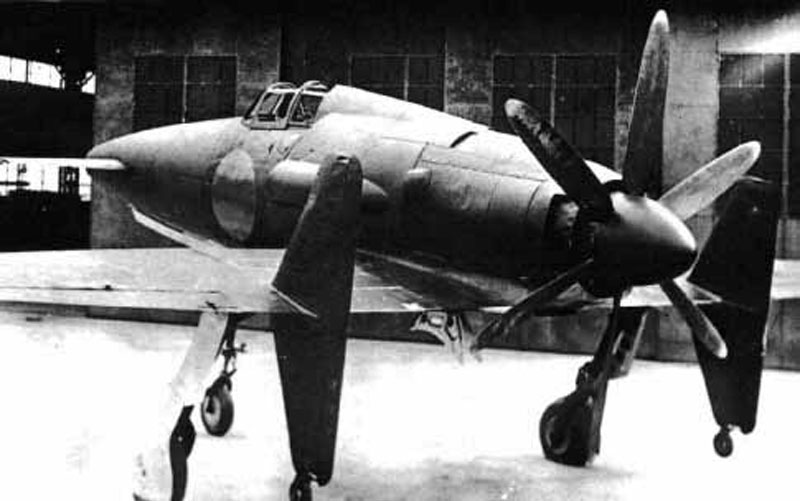
themselves; they built the largest battleships ever to float (and consequently, ever to sink), but finally degraded to kamikaze attacks. The Japanese were desperate and hurting for money and supplies, but still managed to work on highly advanced projects. The Kyushu J7W is probably one of the weirdest looking airplanes ever built; it would have been exceptionally fast, but even if it had been produced in large numbers, it probably would not have changed the course of the war.  

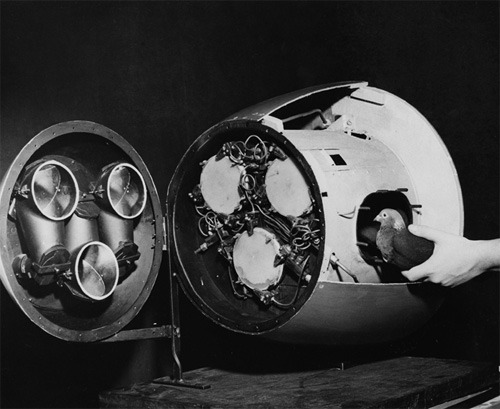
The Americans were in on the weirdness, too. While a group of scientists was in the Arizona desert working on the Manhattan Project (which literally blew all the other super weapons out of the picture), a psychologist named B. F. Skinner came up with the idea of a pigeon-guided missile (which was almost as crazy as the bat-bomb idea...don't get me started on that one). The theory was that pigeons inside the missile would peck at a screen to keep the thing on course; surprisingly, the United States Army actually gave the project funding, though fortunately, a pigeon-guided missile was never used. No one ever mentioned what happened to the pigeons.

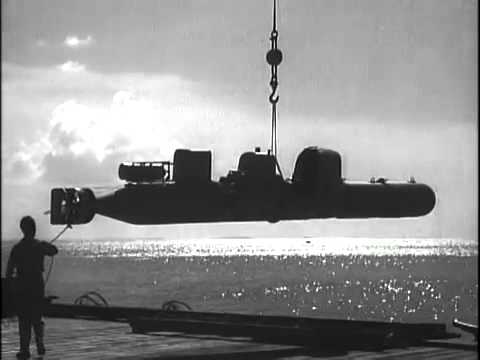
We have the Italians to thank for Human Torpedoes. They were invented during the First World War and
Siluro San Bartolomeo: an Italian manned torpedo
perfected in the Second for use against ships in harbors. According to the plan, divers would point them in the right direction, then jump off while the torpedo continued on to blow up a ship. By the later half of the war, the British, Americans and Germans were using them too, so did the Japanese, only their divers didn't bother jumping off.

Secret weapons and plots abounded throughout the Second World War. One could argue that a few of them cut the war short (the Manhattan project certainly did), but despite it all, actual flesh and blood men, willing to give the ultimate sacrifice, have remained the main element in every war in history.

~Psyche

Thursday, April 3, 2014

Touching the Past

Unidentified women on one of the promenade decks
 of what we believe is the RMS Lusitania.
The glass slides are stereoscopic, to be used
 in a stereoscopic viewer for a 3D effect
Don’t tell anyone, but the oldest thing I've ever touched was a 3,000 year old Assyrian relief. It was worth it. You could still see some of the original paint in the cracks and cuneiform covered it. At one time that panel, and its fellows, were brilliantly painted and adorned the walls of a palace.  
The majority of old things that I’m familiar with are much more recent than those stone reliefs, but I still have a similar thrill when I handle them. Not long ago, we came into possession of a box full of hundreds of glass slides taken by my great-great uncles at the turn of the last century. They’re more than a hundred years old and depict a lost time that we will never see again. Holding them up to the light transports you suddenly into the past in a way that I can’t describe.
We know my great-great uncles were prolific travelers, sometimes crossing the Atlantic more than once a year for business. They traveled first class, stayed at the finest hotels, and one of them even went as far as Algeria and Spain. Those were the days of globetrotting.
Postcard of the Lusitania my uncle sent just before his departure from New York.
He writes: Just a line to say au revoir. Hope all is well during my absence. Oct 21, 1908. 
Unfortunately, my great-grandmother, who collected the slides and letters and postcards, had an odd way about her. She often labelled things wrong and instead of keeping the letters they sent home, she only clipped the insignia of the hotels they stayed at out of the top of the letters and threw the rest away. She was a strange one.
However, as we've been scanning the slides, we've been able to do a bit of detective work of our own. Sometimes there are words in the pictures…the names of hotels, the name of a ship on a life preserver, street names…things like that. Slowly, we've been able to piece together the places that my great-uncle visited back in the years before the Great War.
Unidentified passengers, c. 1907-1908 
Part of the name 'Lusitania' can be seen 
just behind the man in the foregrounds' left elbow
One of the most fascinating things Rose discovered was the name of a ship printed on a life preserver in one of the photographs. It was the name Lusitania.
The RMS Lusitania was the queen of her day. She was one of the fastest liners afloat and her interior rivaled that of the later Titanic. Unfortunately, like the Titanic, the Lusitania was also an ill-fated ship. In 1915, she was torpedoed off Ireland by a German U-Boat. The first explosion wasn't enough to sink her, but after a second explosion, she went down in 18 minutes with the loss of 1,195 lives, in one of the most devastating sinkings of a civilian ship in history. It’s almost certain that her sinking, along with the Zimmerman Telegram, prompted the United States to declare war in 1917.
Later it was speculated that the Lusitania was carrying a secret cargo. Her hold was packed with war supplies, as well as several million bullets, but theories that she was carrying Aluminium dust or the explosive, guncotten, disguised in crates of beef ran wild. These theories have never been proven, but no one is sure it wasn't the Lusitania’s cargo that caused the second explosion that sank her so quickly.
Of course, my uncle wasn't aboard the Lusitania when she went down. He traveled aboard her shortly after her maiden voyage in 1907, but it’s still odd to think that he walked those same decks that Robert Ballard revealed when he explored the wreck in 1993.
A post card sent by a family friend from Hamburg in 1915, before America's entry into the war. The Lusitania was sunk the spring of that year.
He writes: Hamburg 1/10/15. Have returned here. It appears now that my trip will be successful. I will probably sail back [to New York] on Frederick VIII leaving Copenhagen on the 6th of February. During these days the first train between Berlin and Constantinople will run. Today the news of the evacuation of Gallipoli arrived.
The First World War really put an end to the great transatlantic liners. There was a short resurrection in the twenty years between the wars, but ocean liners were doomed. The only ocean liner in active service today is the British liner, Queen Mary 2; the rest have either been scrapped or turned into floating hotels.

I wish liners would come back; not only are the fares cheaper than flying, but they have a sense of the old world about them. My wish may soon come true; a slightly crazy, Australian billionaire wants to bring back the Titanic. The replica, Titanic II, is due to be launched in 2016. I do not jest. 
~Psyche

PS: The following video was released in 1918 by American animator Winsor McCay. It was the longest piece of animation at the time, and the first animated documentary. It was afterwards verified that only one torpedo struck the Lusitania.


Monday, December 16, 2013

Our Dangerous Life

A few weeks ago, I came downstairs to find that a pot I had put on the stove was glowing red hot and the aluminum
There are large quantities of Dihydrogen monoxide in this image
coating on the bottom was dripping in blobs into the burner. I turned the burner off and tried to recover from my shock.
This unfortunate circumstance, of course, would never have happened if all of the substance contained in the pot had not evaporated. The substance is referred to as dihydrogen monoxide.
What is dihydrogen monoxide?
It is a colorless liquid which his highly volatile at high temperatures and is capable of inflicting severe burns. In its solid state, it can cause severe tissue damage. Surprisingly enough, recent studies of this substance are showing that it is being used extensively in everyday products; most alarmingly in pesticides, nuclear power plants and the milk industry. Dihydrogen monoxide has been polluting our rivers and lakes for generations and may even be contributing to climate change. It is a key component in acid rain and can cause corrosion in many metals. Studies show that both humans and animals can become dependent on dihydrogen monoxide and athletes ingest it to increase their performance.
Deaths due to inhalation of dihydrogen monoxide number in the millions. During World War II, it was not the German torpedoes that killed sailors, it was dihydrogen monoxide. Recently many pacific countries have been hard hit when dihydrogen monoxide, which is a major component in hurricanes, tornadoes and tsunamis, ravaged their shores.
Despite all these hazards, dihydrogen monoxide is a common additive in everything from baby formula to ice cream. Industries use this substance extensively in the production of multiple household items without telling their consumers. Why? Because it’s cheap and readily available.
As alarming as it may seem, this highly dangerous substance is key to our existence. Scientists agree that without dihydrogen monoxide, life on earth would be impossible. 60% of the average
human’s body weight is dihydrogen monoxide and we require 2.2 liters a day to continue functioning normally. Being deprived of dihydrogen monoxide for just three days leads to almost certain death.
So what can you do to help? Well, nothing. Dihydrogen monoxide is constantly being renewed through the weather cycle and there are vast quantities underground and locked in the oceans. Even if you wanted to, you couldn’t ban the stuff. The most you can do is be thankful it exists.
Dihydrogen monoxide is a threat to our existence, but it is also key in supporting us. Nothing could grow without it. Scientists call it H2O, others prefer to refer to it as earth juice. Me? I just call it water.

~Psyche